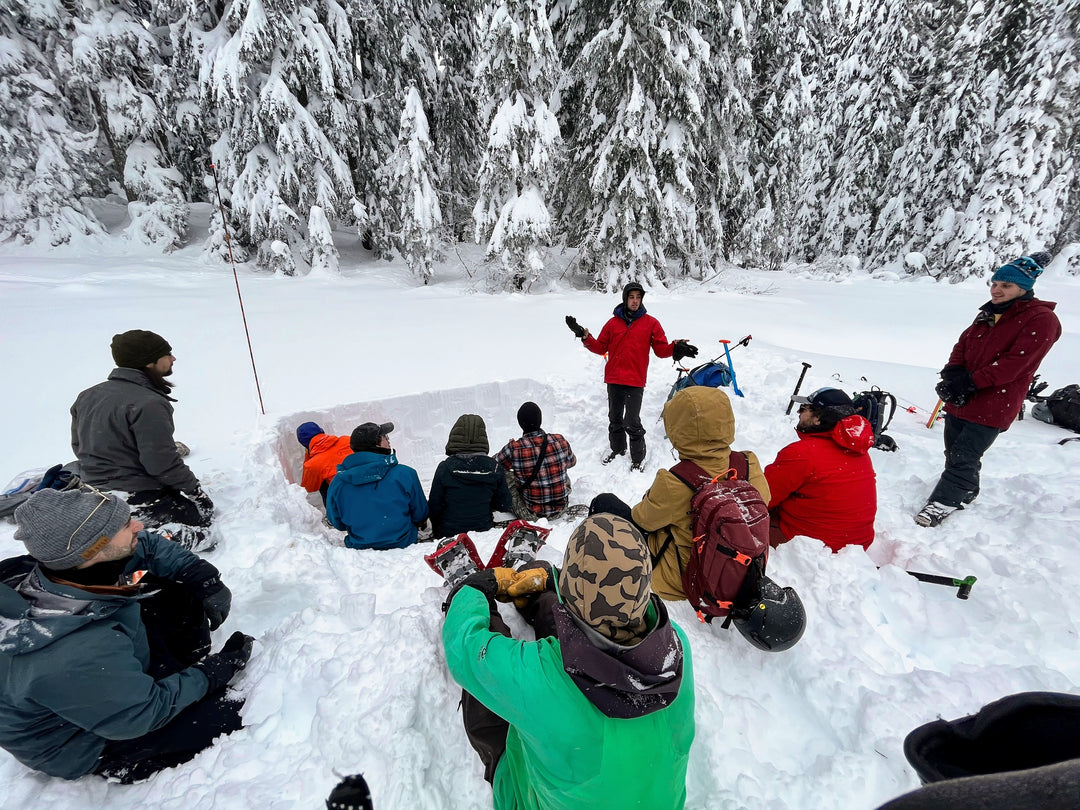
Students digging a snow pit during avalanche course on a sunny day.
Students sit in the snow and listen to their avalanche course instructor discuss safety in the backcountry.
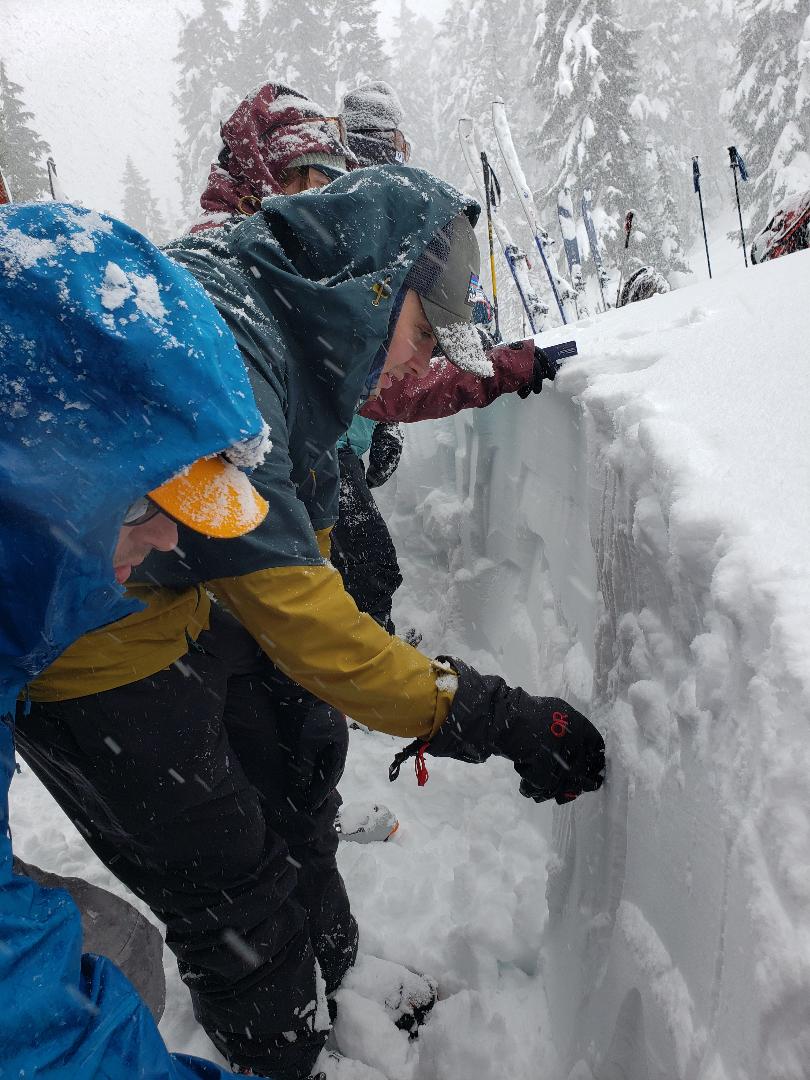
Students evaluating layers in the snowpack during avalanche course on a snowy day.
Wide-eyed female wearing big mittens holds AIARE blue book in front of her face during avalanche course.
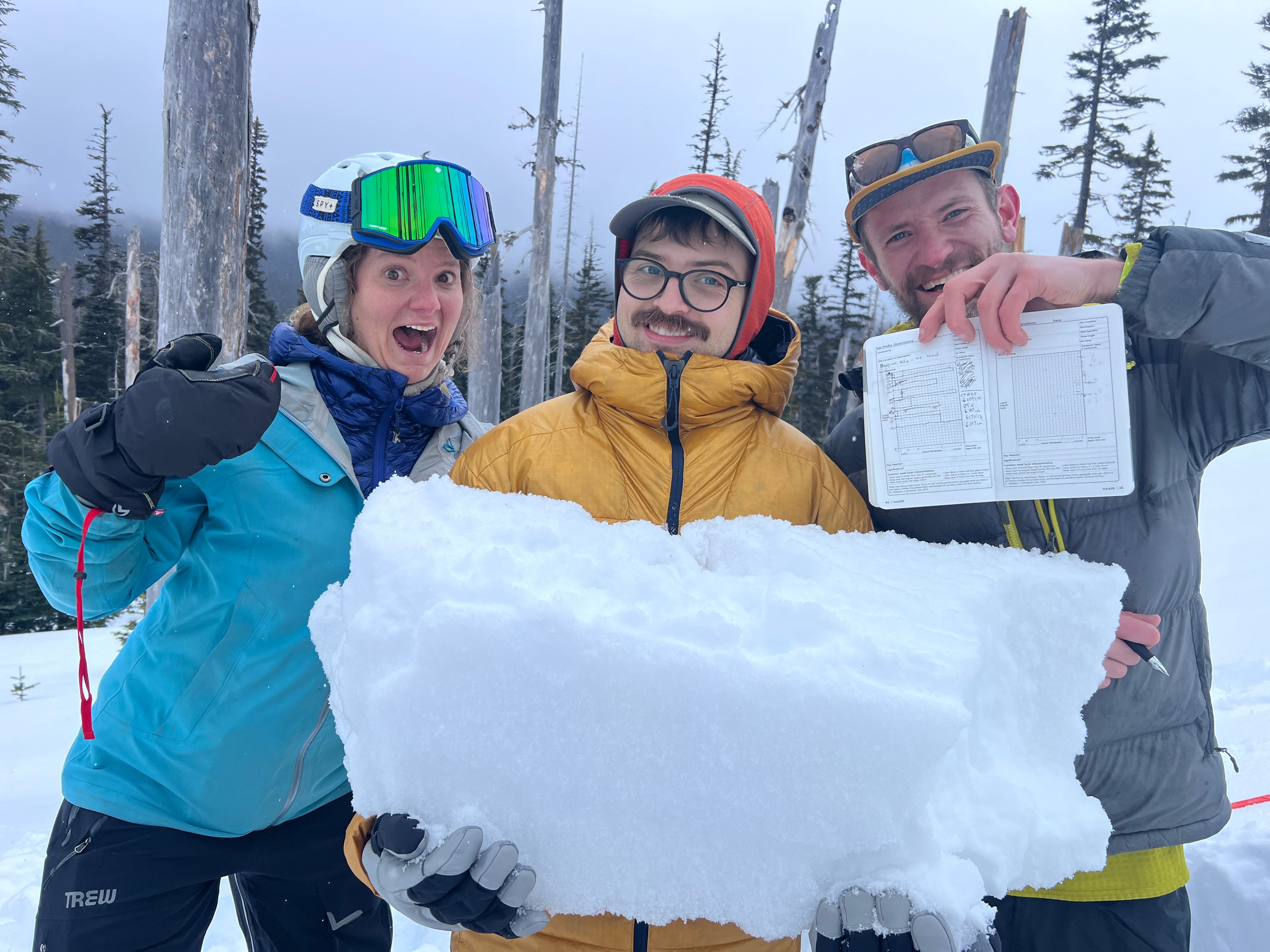
Three smiling AIARE students pose holding a large block of snow and decision-making blue book.
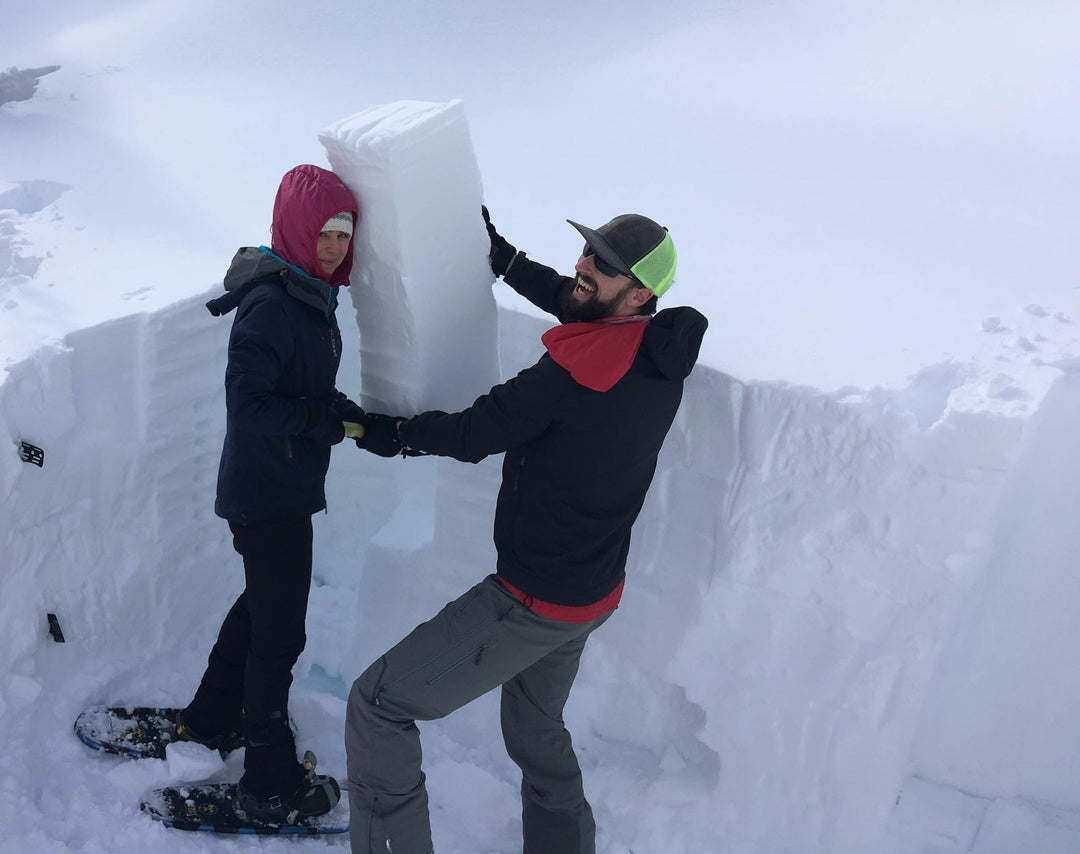
Two people showing the results of their extended column test in an avalanche course.
A group of avalanche course participants smiles for the camera with their shovels.

3-day Beginner AIARE Level 1 Avalanche Safety

Regular price$799.00
/
Location
Book Now Button

Starting your journey to become a competent backcountry traveller can be overwhelming. There's a lot to learn, and it can be challenging to know where to start. Avalanche safety education is crucial, but it's hard to meet the learning objectives of your Level 1 without some level of comfort using your backcountry gear. How do you get that without putting yourself unknowingly at risk?

This 3-day course is the answer - it combines our Backcountry Skiing and Splitboarding Beginner Course with AIARE Level 1 Avalanche Safety to provide a thorough introduction to touring, trip planning, and avalanche avoidance for intermediate to advanced resort skiers or snowboarders, who are new to backcountry. On day 1 you'll focus on skinning, transitions, and building a foundation for winter travel. The weekend will cover our standard AIARE 1 curriculum, which you will know be ready for.

From AIARE Level 1 Avalanche Safety:

Traveling in a winter environment has inherent risk. Snow conditions dramatically change throughout the winter, affecting snow stability. The ability to recognize avalanche terrain, assess the snow around you, and communicate effectively within your group is critical to your safety. This AIARE Level 1 avalanche course is designed to give students a basic understanding of why avalanches occur and to develop a framework for making decisions while traveling in avalanche terrain. Additionally, the course provides instruction in beacon use and companion rescue should an avalanche occur.

AIARE 1 follows a hybrid model, with approximately 8 hours of self-paced, online coursework followed by two 8-hour days in the field. You will receive access to this approximately 2 weeks before your course. 

All of our AIARE Level 1 courses require attendance at an online pre-course meeting 2 evenings before your course start date. For Sat-Sun courses this is typically Thursday evening 6:30-8:30pm. All online learning is due prior to this meeting. Your instructor will reach out before the course with more information.

Overall, this course is best suited for those who have some experience in a winter backcountry environment, are familiar with their gear, and have participated in a free Avalanche Awareness course. 

It is important to note that some of the avalanche rescue and snow pit testing components previously taught on an AIARE Level 1 course have been deemphasized in order to provide more field time for developing the decision-making skills that prevent backcountry users from being caught in avalanches. If you are looking for more devoted rescue practice and certification, check out our Avalanche Rescue course.
Duration

  • 3 days
  • 8 hrs/day
  • Online Coursework

Season

  • Winter

Client:Guide Ratio

6:1

Minimum Participants

3

Online learning - Please allow 8 hours for the online curriculum. It will provide an overview of avalanche types and characteristics and will introduce case studies to analyze avalanche incidents. Course progression includes:

  • Types and characteristics of avalanches
  • Avalanche motion
  • Size classification
  • The mountain snowpack: an introduction to metamorphism and layering
  • Avalanche terrain recognition, assessment, and selection
  • Route finding and travel techniques
  • Decision making and Human Factors

In the Field - Each morning, meet your instructor at 7am ready to begin. You can expect to be back to the parking lot around 4pm each evening. You are responsible for your own lodging and food.

Day 1 - This day will focus on equipment and movement to give you a solid foundation in preparation for the more in-depth avalanche training to come. Your instructor will help everyone get situated with their gear before heading out on the tour. Along the way, your instructor will assess and discuss avalanche conditions and go over general winter travel safety and proper skinning technique. You will tour for most of the day with stops for lunch and to discuss or practice important topics and techniques. Enjoy some of your first backcountry turns! You can expect to be back to the trailhead around 4pm.

Day 2 - The day will begin indoors with a discussion of weather observations and how to use a daily avalanche bulletin to assess risk. After the initial discussion, we will travel to an outdoor location to introduce beacons and companion rescue. The day ends with a route planning session to prepare us for the following day.

Day 3 - The day will again start with a discussion of weather observations and use the daily avalanche bulletin to assess risk before moving to an outdoor location. During the day, we will focus on appropriate travel techniques, features of the snowpack, and terrain identification. We will end the day with a mock rescue scenario and debrief.

  • Attendance of a free NWAC Avalanche Awareness Course is recommended.
  • Intermediate to advanced skiing or snowboarding skills (ability to confidently ski or ride blue square runs in variable snow conditions).
  • Ability to tour for 3-4 hours and ascend 1000' with a 30 lb pack.
  • Upon registration, you will receive a confirmation email full of important information - make sure to read it thoroughly!
  • 7-10 days before your trip you will receive an email from your guide containing even more details, including the exact meetup location and time.
  • This is a hybrid course that requires an online learning module to be completed in advance. Please plan for about 8 hours to complete the online education portion.
  • 2 weeks before your course start date, you will receive an invitation to your online coursework via the email address you provided in your registration. This email will come from our online learning service provider, "Rounded Adventurer" or "Thinkific." Be sure to check your spam filters if you don't see it!
  • Plan to attend a virtual pre-trip meeting in the evening a few days before your course begins. This is required and a great opportunity to meet your guide, review gear, discuss your trip plan, and ask any last minute questions. For Sat-Sun AIARE courses plan on Thursday 6:30-8:30pm; otherwise the exact time of your meeting will be set by your instructor and noted in their welcome email.
  • Leading up to your course, make sure to eat healthy, drink extra water, and get plenty of sleep.
  • Please arrive on time and ready to go at your pre-arranged meeting location. Upon arrival, we'll distribute any group gear and finish loading our packs. From there we will caravan to the trailhead.
  • All along the way, our office team is available via email or phone to answer any questions you may have.

This course will leave you with knowledge and practical application of:

  • Selection, use, and care for the necessary equipment for a day of backcountry touring.
  • Uphill and downhill travel techniques and efficient transitions.
  • Describing a basic framework for hazard identification and decision making in avalanche terrain.
  • Planning and preparing for travel in avalanche terrain.
  • Identifying avalanche terrain.
  • Effective companion rescue.

PLUS:

  • A fun experience you’ll remember forever! 
  • A sense of accomplishment in achieving your goals for the trip.
  • Confidence in your newfound skills and where to take them next.
  • Tips and tricks to add to your toolbox from our professional and knowledgeable guides.

Equipment Lists

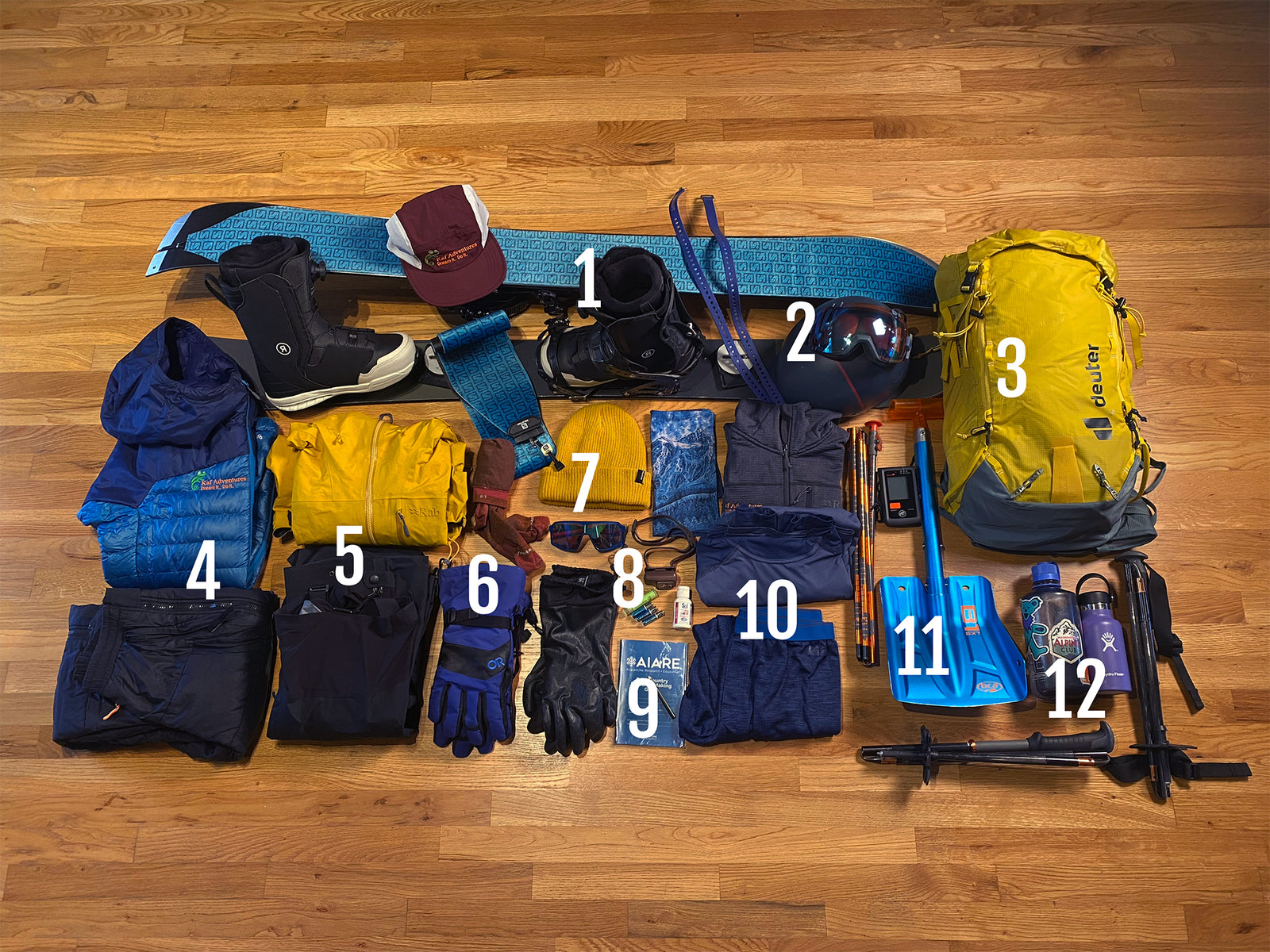
Required Gear

  1. Backcountry ski or splitboard setup : boots, skis/splitboard, touring bindings, climbing skins, poles
  2. Hemet and googles for downhill riding
  3. 30-50L backpack : must fit avalanche safety gear inside
  4. Insulating/puffy layer
  5. Waterproof layer : hooded jacket and pants/bibs
  6. Two pairs of gloves : insulating gloves and waterproof gloves
  7. Head/face protection : warm hat, sun hat *baseball cap is fine, neck gaiter *buff or balaclava
  8. Personal kit : sunscreen SPF 40 or higher, lip balm, headlamp and extra batteries, toiletries, plastic baggie for waste, personal medications
  9. AIARE Bluebook : Kaf provides these, but you will need to make sure to have it with you on day 2!
  10. Moisture wicking, non-cotton base layer top and bottom
  11. Avalanche safety gear : transceiver, shovel, probe *longer is better for the maritime snowpack
  12. Water and your favorite snacks (maybe a thermos of hot soup!)

OTHER / OPTIONAL GEAR

  • Pre-made lunch items, easy to eat with gloves on
  • Handy pocket items; gel, chews, bars, etc.
  • Whistle
  • Area maps and compass
  • Heavy duty plastic trash bags (for water-proofing)
  • Camera
  • Watch
  • Half foam pad to stand/sit in snow
  • Bandana

Car Equipment (items to keep in your car) *All of these items are optional but recommended when traveling in the mountains in winter.

  • Water bottle or thermos
  • Non-perishable food (salty snacks!)
  • Comfortable and warm cloths, socks, and shoes
  • First aid kit
  • Folding saw
  • Shovel
  • Warm blanket or sleeping bag
  • Tire Chains
Students digging a snow pit during avalanche course on a sunny day.