Mt. Adams Summit Climb

Mt. Adams Summit Climb

Regular price$899.00
/
Book Now Button

Located on the north side of the Columbia River Gorge, Mt. Adams is the third highest of all the Cascade volcanoes. Despite standing at 12,276', Mt. Adams' gradual slope and minimal technical terrain make the South Spur the perfect place to start your mountaineering career. 

This guided climb will occur over 2 days. The South Spur is free from crevasses and allows you to focus on kicking perfect steps as you gaze at the beautiful landscape surrounding you. You will still be challenged physically and mentally as you ascend into the thinning air to the summit. It's a perfect way to test yourself at elevation without the technical commitment of Mt. Baker or Mt. Rainier. You will be rewarded for summiting one of the most massive volcanoes in the continental United States with panoramic views of Mt. Hood, Mt. Rainier, Mt. Jefferson, and more. With luck, conditions will allow for long glissades on the descent. Either way, our professional guides will ensure you have an unforgettable experience that will leave you feeling accomplished and ready for the next challenge.

If you've already climbed this route, have glacier travel experience, and are looking for the next challenge, contact us to learn more about custom climbing opportunities on the Adams Glacier or North Ridge routes. If you'd rather float down on skis, see Summit and Ski Mt. Adams.

Duration

  • 2 days
  • 1 night

Season

  • Spring
  • Summer

Client:Guide Ratio

3:1

Minimum Participants

3

Day 1 - Arrive at your designated meeting location by 8am to go over equipment, distribute group gear, and finish loading your packs before driving to the trailhead. The approach to basecamp at the Lunch Counter is about 4 miles and 4,000 feet of elevation gain. After setting up camp, you can spend some time practicing crampon and ice axe techniques and self-arrest. After a long day, you will be glad to have a hot meal and go to bed early to get some rest for the summit attempt!

Day 2 - Leave camp around 3am to start the summit attempt. Depending on the route/conditions/weather and a myriad of other factors, it can take anywhere from 4 to 6 hours to reach the summit. Enjoy the views and sense of accomplishment - you earned it! After a short celebration, be prepared to plunge step several thousand feet back to camp. We'll have a bit of a rest, then break down camp, and head back to the cars. You can expect to be back to the trailhead around 4pm.
  • Mount Hood Skills Course or equivalent experience.
  • Ability to safely travel on moderate to steep snow slopes with crampons and ice axe.
  • Any additional mountaineering experience will enhance your ability to learn, but is not required.
  • Ability to hike for 8 hours and ascend up to 4000' with a 40 lb pack for 2 days in a row.
  • Upon registration, you will receive a confirmation email full of important information - make sure to read it thoroughly!
  • 7-10 days before your trip you will receive an email from your guide containing even more details, including the exact meetup location and time.
  • Plan to attend a virtual pre-trip meeting in the evening a few days before your course begins. This is required and a great opportunity to meet your guide, review gear, discuss your trip plan, and ask any last minute questions. For Sat-Sun AIARE courses plan on Thursday 6:30-8:30pm; otherwise the exact time of your meeting will be set by your instructor and noted in their welcome email.
  • Leading up to your course, make sure to eat healthy, drink extra water, and get plenty of sleep.
  • Please arrive on time and ready to go at your pre-arranged meeting location. Upon arrival, we'll distribute any group gear and finish loading our packs. From there we will caravan to the trailhead.
  • All along the way, our office team is available via email or phone to answer any questions you may have.

This trip will leave you with knowledge and practical application of:

  • Gear packing and equipment choices.
  • Self-care on the mountain.
  • Using crampons and ice axe.
  • Self-Arrest and self-belay.
  • Ascending and descending steep snow slopes.
  • Basic knots used for mountaineering.
  • Glacier rigging, rope team travel and rope management.
  • Mountain hazards and safe travel practices.
  • Basic emergency response.


PLUS:

  • A fun experience you’ll remember forever! 
  • A sense of accomplishment in achieving your goals for the trip.
  • Confidence in your newfound skills and where to take them next.
  • Tips and tricks to add to your toolbox from our professional and knowledgeable guides.

Equipment Lists

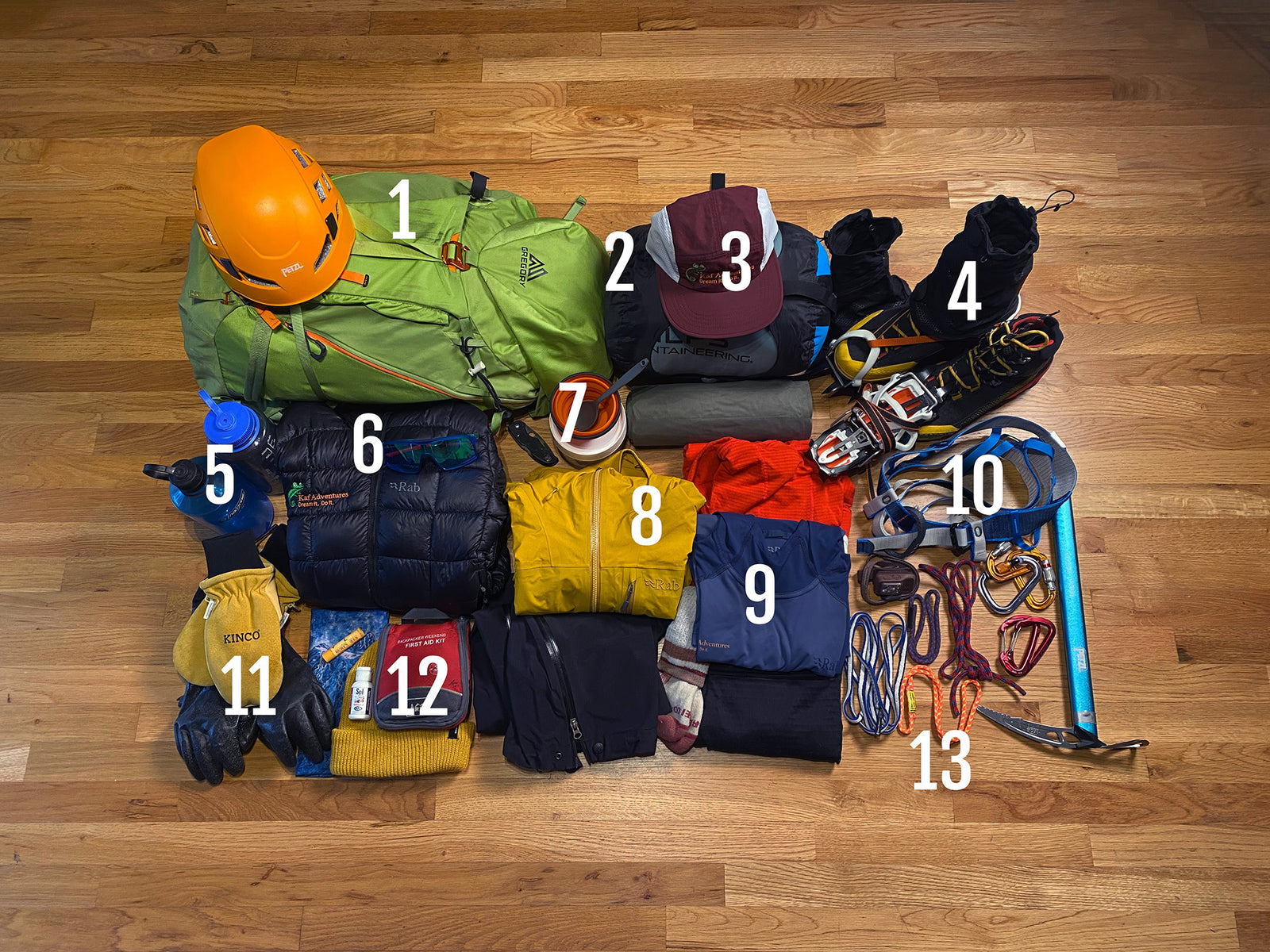
Required Gear

  1. Backpack 50-70L : make sure to leave room for group gear 
  2. Sleeping gear : 20º-30º sleeping bag, sleeping pad
  3. Head/face protection : warm hat, sun hat (baseball cap is fine), neck gaiter (buff), sunglasses with good side coverage
  4. Mountaineering boots and crampons that fit snugly : (gaiters optional but encouraged)
  5. Water bottles with at least 2L capacity
  6. Insulating/puffy layer
  7. Personal mess kit : bowl (w/ lid preferred), cup, utensil
  8. Waterproof layer : hooded jacket and pants
  9. Base layer top and bottom : Moisture wicking, non-cotton 
  10. Climbing gear : harness, helmet, mountaineering axe
  11. 2 pairs of gloves : insulating gloves, waterproof gloves
  12. Personal kit : sunscreen (SPF 40 or higher), lip balm, headlamp and extra batteries, toiletries (please bring a plastic baggie for waste), personal medications and first aid, personal medications and first aid
  13. Modified Glacier kit : 2 pear shaped locking carabiners only (other items shown are not needed)


OTHER / OPTIONAL GEAR

  • Lunches and snacks 
  • Camp shoes 
  • Trekking poles 
  • Whistle 
  • Pocketknife/Leatherman 
  • Extra nylon cord (25-50’) 
  • Area maps and compass 
  • Heavy duty plastic trash bag (for water-proofing) 
  • Note pad/pencil
  • Camera 
  • Watch 
  • Half foam pad to stand/sit in snow 
  • Extra stuff sacks 
  • Bandana 
  • Wind-breaker jacket and pant

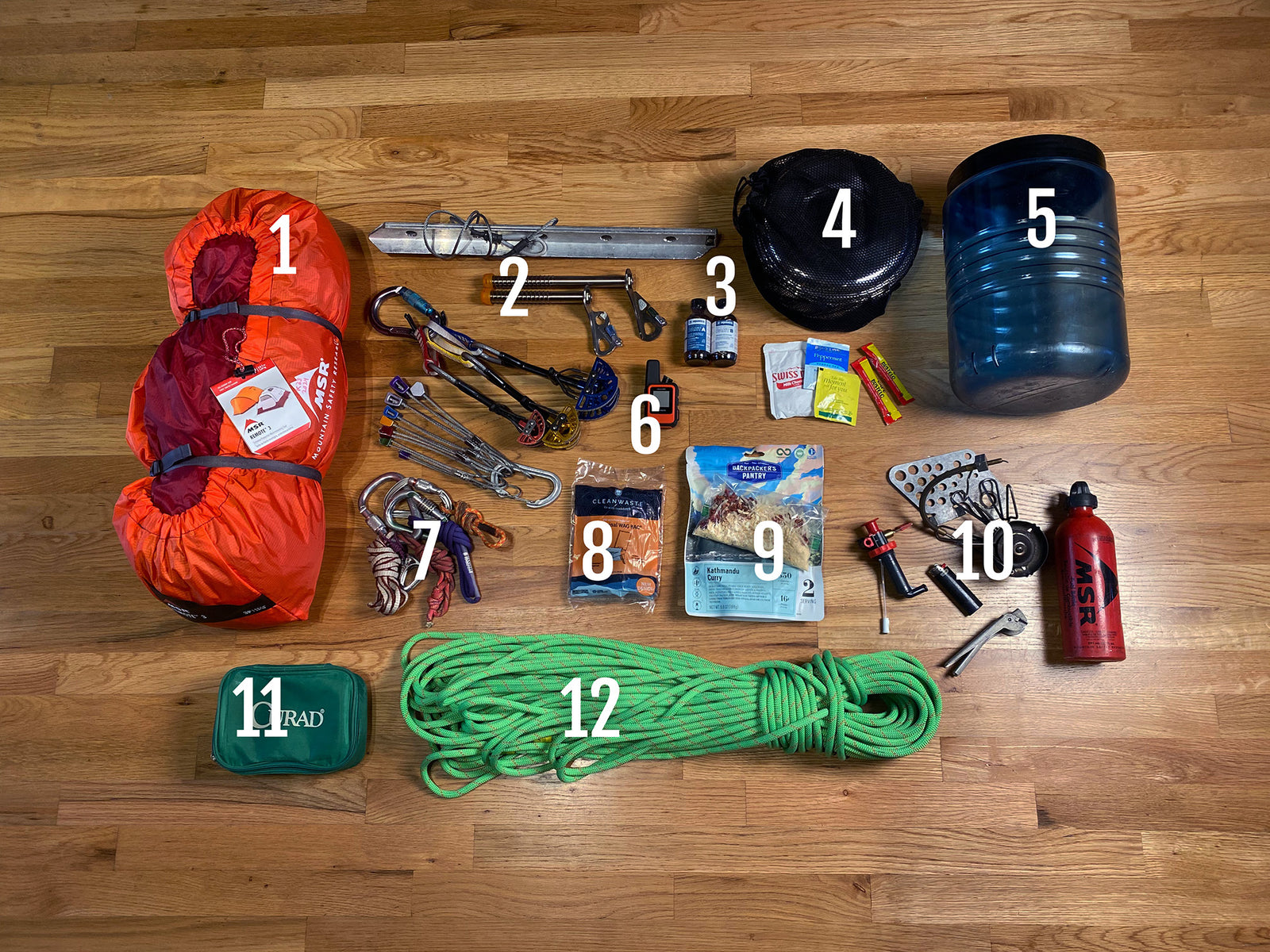
What Kaf Provides

  1. Tents
  2. Assorted protection suitable for the objective : ice screws, cams, pickets
  3. Water filtration
  4. Group cookware
  5. Food storage
  6. In reach/satellite radio
  7. Glacier rig kit : assorted cords, pulleys
  8. Wag bags
  9. Breakfasts and dinners while in the field : this includes hot drink mixes
  10. Group stoves and fuel
  11. Group first aid kit and medical supplies 
  12. Glacier/climbing ropes